
Ball of foot pain, known clinically as metatarsalgia, is usually caused by too much pressure on the metatarsal bones just behind your toes. It commonly causes sharp, aching or burning pain under the ball of the foot that gets worse with standing, walking or running, and can feel like there is a pebble stuck in your shoe. The fastest way to ease it is to take pressure off those bones: supportive, podiatrist-designed insoles with a metatarsal dome (a raised pad that sits just behind the ball of the foot) redistribute weight across a wider area of the forefoot, while proper arch support and a stabilising heel cup keep the rest of the foot aligned. Most people notice an improvement within a few weeks of consistent insole use, alongside supportive footwear and some simple activity changes.
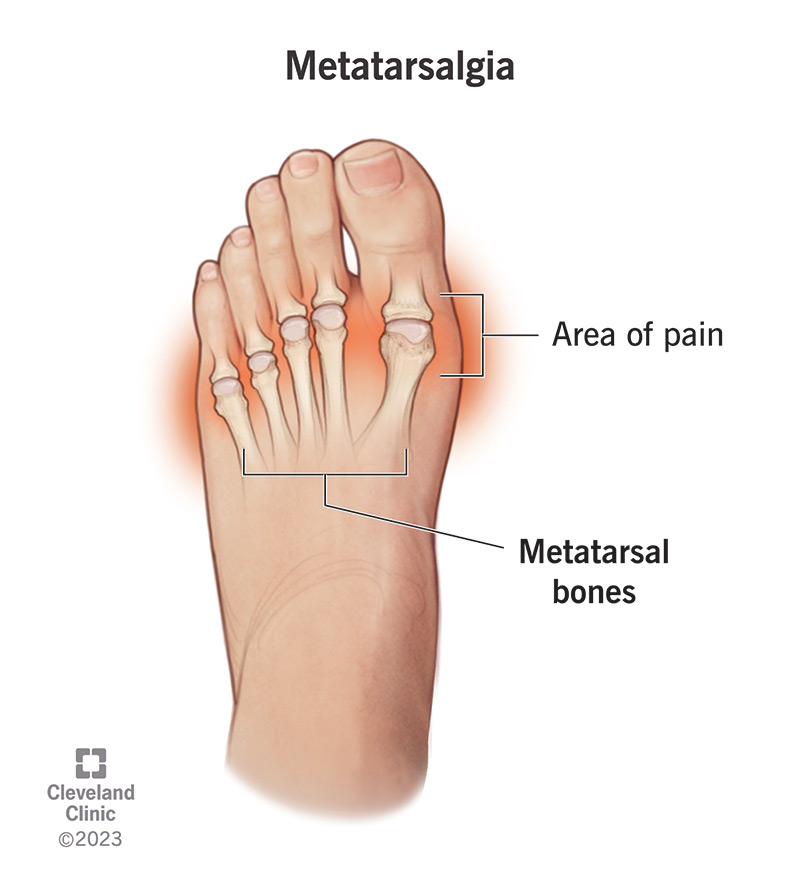
What is ball of foot pain (metatarsalgia)?
Metatarsalgia is the general term for pain and inflammation centred under the metatarsal heads, the bones at the base of your toes. It's an overuse condition rather than a single injury, so it tends to build up gradually rather than appear overnight. People usually describe it as a burning, aching or sharp pain that worsens with standing, walking or running, and eases with rest. Some also notice numbness or tingling in the toes, or a sensation of a lump or pebble under the foot when they walk.
What causes pain in the ball of your foot?
Ball of foot pain is rarely caused by one thing alone. It's usually a combination of how your foot is shaped, footwear, and day-to-day activities.
| Common cause | How it adds pressure to the forefoot |
|---|---|
| Unsupportive or worn-out shoes | Thin, flat or overworn soles let the metatarsal heads absorb shock directly instead of spreading the load |
| High heels or narrow toe boxes | Tips body weight forward onto the forefoot and compresses the toes |
| High-impact activity (running, court sports, hiking) | Repeated forefoot loading without enough cushioning or recovery time |
| High arches or flat feet | Poor shock absorption or uneven weight distribution shifts load onto the forefoot |
| Bunions or hammertoes | Changes how weight passes through the smaller metatarsal bones |
| Excess body weight or long hours on your feet | Simply increases the total load the forefoot has to absorb each day |
Is it metatarsalgia, Morton's neuroma or a bunion?
These three conditions all cause forefoot pain, so it's easy to mix them up. Metatarsalgia is a broad, aching or burning pain across the ball of the foot, often under several metatarsal heads at once. Morton's neuroma tends to be sharper and more localised, with numbness or a distinct "pebble in the shoe" feeling. If you're not sure which one you're dealing with, or the pain hasn't improved after a few weeks, it's worth having a podiatrist take a proper look.

How do insoles help relieve ball of foot pain?
Good insoles don't just cushion the sore spot, they change how weight moves through your whole foot so the metatarsal heads stop taking the brunt of it. Look for these features:
- A metatarsal dome: a raised pad positioned just behind the ball of the foot that gently lifts and separates the metatarsal bones, spreading pressure across a wider area instead of concentrating it under one or two points.
- Firm arch support: holds the foot in a more neutral position so it isn't rolling or collapsing forward onto the forefoot with every step.
- A stabilising heel cup: cradles the heel to keep the whole foot aligned, which reduces compensating pressure further along the foot.
- Shock-absorbing cushioning: an EVA base layer that softens impact from walking, standing or running.

Built with a metatarsal dome, maximum arch support and a stabilising heel cup, so pressure is taken off the ball of your foot.
Full length or half length: which insole suits forefoot pain?
Because metatarsalgia sits under the ball of the foot, the insole needs to actually extend that far forward, and carry a metatarsal dome, to make a real difference.
| Insole | Best for ball of foot pain when... | Price |
|---|---|---|
| Full Length Orthotic Insoles | You want full forefoot coverage, the metatarsal dome and a stabilising heel cup in trainers, work shoes or sport shoes | $120 AUD |
| Half Length Orthotic Insoles | Best if you need arch and heel support in slimmer casual or work shoes with less room in the toe box | $110 AUD |
| Bundle & Save | You want full forefoot relief in your everyday shoes and a slimline option for your dressier or work pairs | $195 AUD |
For most people dealing with pain in the ball of the foot, the Full Length Orthotic Insoles are the better starting point, since they're the only SOLE5 option that carries the metatarsal dome all the way to the forefoot.

Full Length Orthotic Insoles for your trainers and work shoes, plus Half Length for your slimmer or dressier pairs, so your feet get support wherever you are.
What else helps ease pain in the ball of your foot?
Insoles do most of the heavy lifting, but a few habit changes speed things along:
- Choose shoes with a wide toe box and low heel. Narrow or high-heeled shoes push weight straight onto the forefoot.
- Ice the area for 10 to 15 minutes after activity if it's feeling inflamed.
- Scale back high-impact activity for a week or two while your feet adjust to new support, rather than stopping altogether.
- Stretch your calves and toes gently each day, as tight calves can increase forefoot loading.
- Reassess your footwear rotation. Worn-out shoes lose their shock absorption long before they look worn out.
How long does it take for ball of foot pain to improve?
Most people notice less pain within 2 to 4 weeks of consistently wearing supportive insoles alongside the habit changes above. Mild cases can settle sooner, while pain linked to a bunion, hammertoe or ongoing high-impact training may take longer and benefit from a podiatrist's input. If your pain hasn't eased or it's getting worse, that's a good sign it's time for a professional assessment rather than more time in the same shoes.
Frequently asked questions
What does ball of foot pain feel like?
Most people describe it as a sharp, aching or burning pain under the ball of the foot, sometimes with numbness or a feeling of a pebble or lump under the skin when walking. It typically worsens with standing, walking or running and eases with rest.
Can insoles actually fix metatarsalgia?
Supportive insoles with a metatarsal dome and proper arch support won't change the underlying shape of your foot, but they redistribute pressure away from the metatarsal heads, which is usually enough to significantly reduce day-to-day pain and support recovery.
Do metatarsal pads or domes actually work?
Yes. A metatarsal pad or dome positioned just behind the ball of the foot lifts and separates the metatarsal bones slightly, spreading load across a wider area rather than concentrating it under one or two points. Research on foot orthoses with metatarsal pads has shown they measurably reduce peak pressure under the forefoot, making this one of the most consistently recommended features for forefoot pain relief.
What shoes are best if I have ball of foot pain?
Look for a wide toe box, a low or flat heel, a supportive sole that doesn't fold in half easily, and enough depth to fit an orthotic insole. Avoid high heels, narrow pointed shoes and very flat, unsupportive footwear like thin flats or worn-out sneakers.
Should I see a podiatrist for ball of foot pain?
If your pain hasn't improved after a few weeks of supportive insoles and footwear changes, or it's severe, sudden or accompanied by numbness that doesn't settle, it's worth booking a podiatry assessment to rule out other causes such as Morton's neuroma or a stress fracture. A podiatrist can also advise whether off-the-shelf or custom orthotics are the better fit for your feet.
Is ball of foot pain the same as plantar fasciitis?
No. Plantar fasciitis causes pain at the heel or along the arch, typically worst with the first steps in the morning. Metatarsalgia is centred under the ball of the foot, near the base of the toes, and tends to worsen with activity rather than first thing in the morning.
Take the pressure off the ball of your foot
SOLE5 Full Length Orthotic Insoles combine a metatarsal dome, maximum arch support and a stabilising heel cup, podiatrist-designed to help relieve forefoot pain.
Shop Full Length Orthotic Insoles →|
|
|


