
Insoles may help some types of hip pain, but not all of them. If your hip pain is linked to how your feet move (for example, feet that roll inwards or arches that collapse when you stand), a supportive orthotic insole can reduce the stress travelling up the leg and may ease the ache. A 2023 systematic review found a moderate reduction in hip pain with foot orthoses, but the certainty of the evidence was low, so insoles are best treated as one part of a plan, not a cure. If your pain comes from the hip joint itself, such as arthritis or a labral tear, insoles are unlikely to be the main answer.
In this article
- How are your feet and hips connected?
- What does the research say about insoles and hip pain?
- Who is most likely to benefit?
- What should you look for in an insole for hip pain?
- How long do insoles take to work?
- Frequently asked questions
How are your feet and hips connected?
Every step sends force from the ground up through your ankle, knee and hip. Your foot is the first link in that chain, so changes in how it lands can change how the joints above it share the load.
When the arch flattens too far or too quickly (often called overpronation), the shin and thigh tend to rotate inwards. That can alter the alignment of the knee and the way the hip muscles work to keep your pelvis level. Over thousands of steps a day, small differences add up. This is why podiatrists often check foot posture when someone has persistent hip pain, particularly if it comes with knee pain or flat feet.
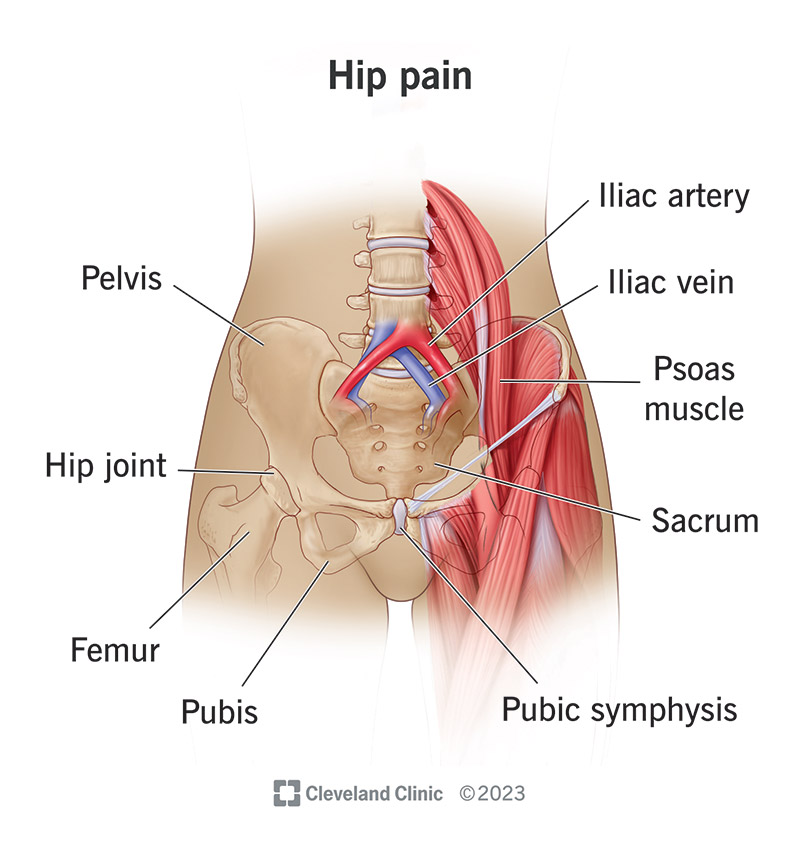
It is only part of the picture. Hip pain also comes from joint wear, muscle and tendon overload, bursitis and pain referred from the lower back. Mayo Clinic notes that pain in the groin or inner hip usually points to the hip joint, while pain on the outer hip or buttock usually involves the surrounding soft tissues.
What does the research say about insoles and hip pain?
The honest answer is that the evidence is still developing. A 2023 systematic review in Musculoskeletal Care looked at foot orthoses and footwear changes for people with hip pain. It included seven studies and 266 participants, covering conditions such as trochanteric (outer hip) pain and hip osteoarthritis.
- Small before-and-after studies linked foot orthoses with better hip pain, function and quality of life.
- Where the results could be combined, they showed a moderate reduction in pain.
- The only randomised controlled trial did not support those findings.
- The authors rated the overall certainty of the evidence as very low to low and called for further rigorous studies.
In plain terms, insoles are a low-cost, non-invasive option worth trying for the right person, but nobody can promise they will resolve hip pain. Be wary of any product that does.
Who is most likely to benefit?
Insoles make the most sense when your feet are part of the problem. The table below is a general guide only; a podiatrist or doctor can assess your individual situation.
| Situation | Are insoles likely to help? |
|---|---|
| Hip ache with flat feet or rolling-in feet | Possibly. Arch support may improve how load travels up the leg. |
| Hip pain after long days standing or walking on hard floors | Possibly. Support and cushioning can reduce fatigue and impact. |
| Hip pain alongside knee or heel pain on the same side | Possibly. A shared foot-mechanics cause is more likely. |
| Deep groin pain, locking or clicking in the joint | Unlikely to be enough on its own. Get the hip assessed. |
| Pain after a fall or injury, or you cannot bear weight | No. See a doctor promptly. |

Podiatrist-designed arch support with a stabilising heel cup and a metatarsal dome to ease pressure under the ball of the foot.
What should you look for in an insole for hip pain?
Because the goal is to guide how your foot loads the ground, structure matters more than soft padding alone. Look for:
- Firm, well-contoured arch support that matches your foot, so the arch is supported without feeling like a lump.
- A stabilising heel cup that holds the heel steady and limits excess rolling at landing.
- Forefoot relief. The SOLE5 Full Length insole includes a metatarsal dome that helps redistribute pressure under the ball of the foot.
- Shock absorption from a cushioned base, which helps when you are on hard surfaces all day.
- A correct fit. Our insoles can be trimmed to size, and the size chart on each product page helps you choose.
Our insoles are included in the Australian Register of Therapeutic Goods (ARTG 441576) as a Class 1 medical device, and were designed by Australian podiatrists for pain in the feet, knees, hips and back. If you wear different shoes for work and play, the full SOLE5 range lets you cover both.

Arch support that slips easily in and out of work and casual shoes.
How long do insoles take to work?
Give your body time to adapt. Most people ease into new insoles over the first 1 to 2 weeks, wearing them for a few hours at first and building up. If they are going to help your hip, changes are more likely to show over several weeks than overnight, so track your pain across 4 to 8 weeks rather than judging by day one. Our guide on getting used to orthotic insoles covers the break-in period in detail.
Insoles work best alongside other measures: strengthening the hip and core muscles, sensible activity pacing and supportive shoes. Mayo Clinic suggests short-term self-care such as rest, ice and over-the-counter pain relief for minor hip pain, and advises seeing a health professional if it does not improve. If you also notice lower back pain, mention it, as back problems can refer pain to the hip.
See a doctor promptly if the pain follows an injury, you cannot put weight through the leg, the joint looks misshapen, or you have fever or sudden swelling.

One Full Length and one Half Length pair, so your arches are supported from the gym to the office.
Frequently asked questions
Can flat feet cause hip pain?
They can contribute. When the arch collapses, the leg can rotate inwards and change how the hip muscles work, which may lead to aching in the hip or outer thigh. Flat feet are not the only cause of hip pain, so a proper assessment is worthwhile.
Which insoles are best for hip pain?
Look for firm arch support, a stabilising heel cup and good shock absorption, in a size that fits your shoe. Structure matters more than soft padding alone. A podiatrist can advise whether an off-the-shelf or custom option suits your foot.
Can insoles make hip pain worse?
Occasionally, if they are the wrong size or worn for too long too soon. Build up wear gradually over the first 1 to 2 weeks. If your pain increases or does not settle, stop using them and speak to a podiatrist or doctor.
Should I wear insoles in all my shoes?
Wearing support in the shoes you use most gives the most consistent benefit. Many people use Full Length insoles in sports and everyday shoes and Half Length insoles in work or casual shoes.
When should I see a doctor about hip pain?
See a doctor if the pain follows an injury, you cannot bear weight, the joint looks out of place, you have fever or sudden swelling, or the pain does not improve with self-care. Groin pain, locking or clicking in the joint also deserves assessment.
Support your feet, support the joints above
Podiatrist-designed orthotic insoles with arch support, a stabilising heel cup and a metatarsal dome.
Shop Full Length Insoles →Included in the ARTG (441576) as a Class 1 medical device.
References:
- Kinsella R, et al. (2023) - Foot orthoses and footwear interventions in people with hip pain: a systematic review
- Mayo Clinic - Hip Pain Causes
- healthdirect Australia - Hip Pain
- AAOS - Orthotics
- Cleveland Clinic - Overpronation
|
|
|


